


Stickman Hook
4.254.05K Reviews
App Specs
- Version
- 9.9.51
- Updated On
- License
- Free
- Downloads
- 100,000,000+
- Developer
- Madbox
- Categories
- Arcade
- Platform
- Android, iOS
Screenshots
 Analysis by AppCompare
I reach for Stickman Hook when I want a game that starts quickly and asks for my attention in short, satisfying bursts. Its swinging is easy to understand, but getting through a tricky stretch smoothly takes more than random tapping. That gap between “I know what to do” and “I timed it well” is the main reason this arcade game keeps pulling me back.
Quick to start, with speed that comes from timing
The game wastes little time getting to its central idea: attach to a point, swing, let go, and carry your momentum onward. That makes it a natural choice when I have only a few minutes, rather than a game that requires a long session or a complicated setup. The action can feel brisk once the stickman is moving, but the pace is not simply about tapping as fast as possible. Releasing at the right moment matters more than frantic input.
That distinction is useful if a level seems to stall or a jump falls short. I try to watch the arc and release when the character is carrying forward movement, instead of holding on until the swing feels almost complete. It is a small adjustment, but it turns the game from a reflex test into a rhythm problem. When the timing clicks, the movement feels fluid; when it does not, a level can demand several attempts.
For a quick break, that retry loop is a strength. I can make a little progress without needing to remember a long story or a complicated set of controls. It is less suitable when I want a calm game that never punishes a missed beat, or when I am looking for a sprawling arcade experience with lots of different modes to learn. The pleasure here is focused on improving one movement skill.
When a short session becomes a longer one
A realistic use case is waiting for a coffee or sitting through a few minutes between errands. I can play a level, notice where my timing went wrong, and try again without committing to a big block of free time. The catch is that a near miss makes “one more go” unusually tempting. If I need to leave promptly, it helps to stop at a level boundary rather than start another attempt while telling myself it will take only a moment.
Longer play changes what I notice. Repeating a difficult section can make my taps less deliberate, especially if I start reacting to the last failure instead of reading the next swing. I get better results by taking a brief pause, then focusing on one decision at a time: where to hook, how much movement to build, and when to release. That approach is more reliable than pressing faster, and it makes repeated attempts feel like practice rather than a frustrating scramble.
The clean, colorful presentation also helps during quick sessions because the important movement stays easy to follow. At the same time, visual simplicity should not be mistaken for a guarantee that every obstacle will be effortless to read. When several hazards or moving elements appear together, I find it more useful to look ahead at the next safe connection than to focus only on the stickman. Planning one move forward can prevent a rushed tap.
Worth Reading Before You Choose

Flipboard Shows What News Apps Must Do Beyond the Feed

Switching to Android Auto Means Rethinking Your Driving Routine

Google Calendar Makes a Crowded Week Easier to Manage

Ludo King Makes the Most of the Minutes Between Plans

Baby Panda World Brings Quick Play to Modern Phones, but Its Game Library Feels Busy

ESPN’s Live Game View Makes Following Close Games Easier
What it does differently from other arcade games
Many mobile arcade games build their appeal around steering, jumping, or reacting to a stream of obstacles. This one is narrower: its hook-and-release motion is the whole point, and momentum links one decision to the next. Compared with a conventional platform game, there is less emphasis on walking around a space and more on judging an arc through it. That focus makes the controls approachable, but it also means the experience depends heavily on whether swinging feels satisfying to you.
If you enjoy learning a compact mechanic and refining it through repetition, that focus is a good fit. If you prefer several distinct activities, a persistent campaign, or more direct control over movement, another arcade or platform game may hold your interest longer. I would also skip it when I want a low-pressure distraction with no abrupt failures: the simple input does not remove the need for precision as the levels become harder.
One practical habit is to treat each attempt as information. If I repeatedly miss the same transition, I change one part of the timing rather than altering every tap at once. Holding for a little longer, releasing earlier, or choosing a different moment to attach gives me a clearer sense of what caused the miss. This is not a shortcut around the challenge; it is a way to make retries useful instead of random.
How it holds up in everyday play
I find the game’s everyday appeal comes from how little setup it asks of me: I can begin with a quick attempt and leave without losing the thread of its central mechanic. This section looks at the practical trade-offs that shape those sessions, especially how interruptions and repeated play affect the experience. That makes it easier to judge whether its focused rhythm fits your routine.
Stability, ads, and the cost of interruption
The straightforward presentation and single central action make the game easy to return to after a break. I do not have to relearn a complex control scheme each time I open it. Still, a level that depends on timing is sensitive to interruptions: if an ad or a real-world distraction breaks my focus between attempts, I may need a moment to settle back into the rhythm. That is a small but real friction point for a game designed around quick play.
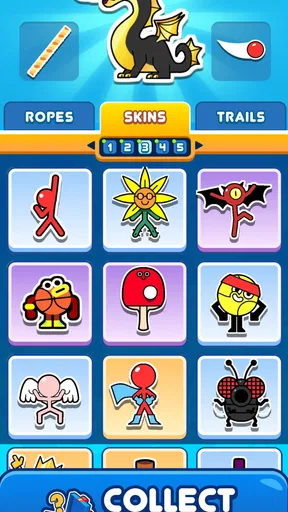
Ads can appear between levels, so the natural stop-and-start structure may be interrupted just as I am ready to continue. They are a more noticeable downside when I am playing several levels in a row than when I only open the game briefly. The game is free, with in-app purchases priced from $0.99 to $20.99 per item; the available purchases include cosmetic items, and spending is not necessary to learn the swinging mechanic. I would decide whether the interruptions bother me through ordinary play before considering a purchase.
Madbox developed the game, which has an average rating of 4.2 from around 557,000 ratings and more than 54,000 written reviews. It has passed 100 million installs, a sign that this compact style has found a wide audience, though popularity alone cannot tell me whether its retry-heavy rhythm suits a particular player. I would judge it by the feel of the controls and by how much patience I have for repeating a section.
Device fit and a sensible performance verdict
The game is rated for Everyone and requires Android 8.0 or later. Its version is 9.9.20. Those details make it possible to check basic compatibility before installing, but I would not assume that a compatible device guarantees the same feel on every screen or in every situation. In a timing-based game, even a minor interruption or an unfamiliar grip can make a release feel less controlled, so I prefer to play with the screen unobstructed and my attention on the arc.
I would not choose it for demanding visual spectacle or deep, varied systems; its appeal is the quick loop of swinging, missing, and adjusting. The main performance question for me is therefore not how much visual complexity it displays, but whether the controls remain comfortable during repeated attempts. If a session feels less smooth than expected, I first check whether I am rushing my inputs or playing while distracted rather than blaming the game immediately. That is a practical distinction in a game where timing is the skill being tested.
Overall, I see it as a light, focused arcade game for players who enjoy mastering one tactile idea. It is easy to sample, but its later challenge and between-level ads can make longer sessions less relaxing than the bright presentation suggests. I would recommend it to someone who likes short retries and visible improvement, and point a player seeking variety or a gentler pace toward a different kind of game. Madbox released it on November 2, 2018, and its lasting appeal is easiest to understand once a well-timed swing carries cleanly into the next one.
First Impressions and Gameplay
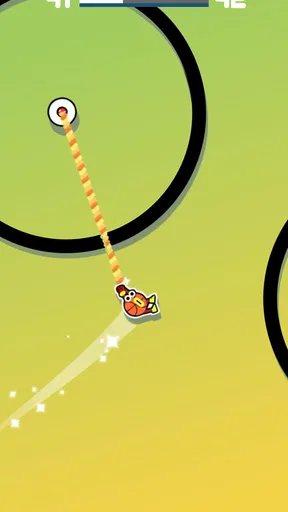
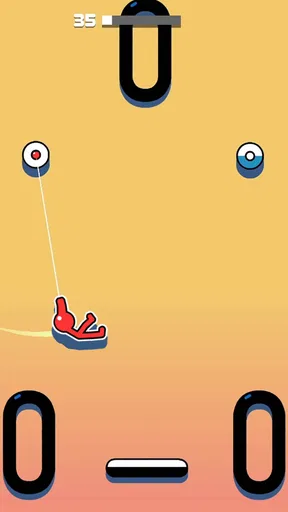
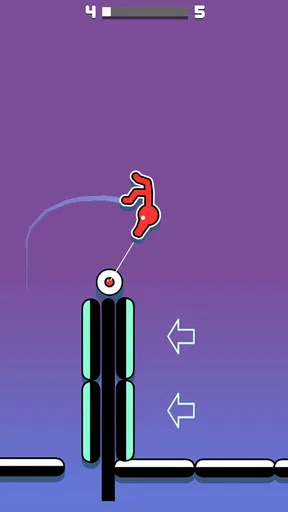
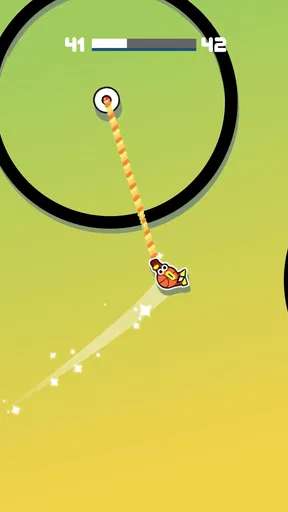
When I first opened Stickman Hook, I was greeted by its minimalist design. The interface is straightforward, which made jumping into the game a breeze. You control a stickman character, and your goal is to swing from point to point, avoiding obstacles and reaching the finish line. It's like a Spider-Man simulator but with a stick figure. Simple, right?
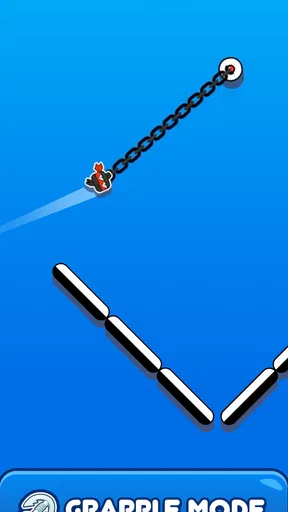
The controls are incredibly intuitive. You tap the screen to hook onto a point, and your stickman will start swinging. Release, and he'll fly through the air. The trick is timing your taps to build momentum and navigate through the various obstacles in each level. It sounds easy, but trust me, it gets challenging fast!
Graphics and Sound
The graphics are clean and vibrant, which adds to the charm of the game. Each level is a splash of color, making it visually appealing without being overwhelming. It's perfect for those who like their games to be easy on the eyes.
As for the sound, it's got a catchy little tune that plays in the background, adding a playful vibe to the game. The sound effects are minimal but do the job well. They provide just enough feedback to keep you engaged without being distracting.
Levels and Difficulty
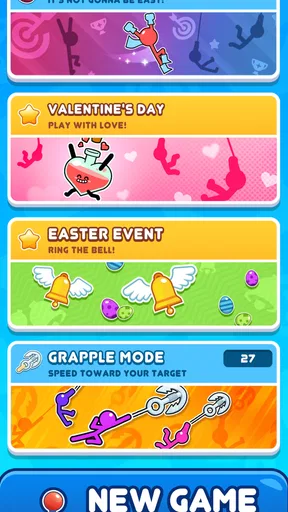
One of the things I love about Stickman Hook is the variety of levels. There are tons of them, each introducing new challenges and obstacles. You'll find yourself swinging over spikes, bouncing off trampolines, and even dodging moving platforms. It keeps the game fresh and exciting, as you're always curious about what the next level will bring.
The difficulty ramps up nicely. The early levels are forgiving, allowing you to get the hang of the mechanics. But as you progress, you'll need sharper reflexes and better timing to succeed. It's a great balance that keeps both casual players and hardcore gamers interested.
The Addictive Factor
What makes Stickman Hook so addictive? I think it's the combination of simplicity and challenge. The game is easy to pick up, but mastering it is a whole different story. You'll find yourself saying, "Just one more level," more times than you'd like to admit.
Additionally, the game is perfect for short bursts of play. Whether you're waiting in line or taking a quick break, you can easily dive into a level or two. But don't be surprised if those few minutes turn into an hour!
Monetization and Ads
Now, let's talk about the not-so-fun part: ads. Like many free mobile games, Stickman Hook relies on ads for monetization. They pop up between levels, which can be a bit annoying. However, they're not overly intrusive, and you can often skip them after a few seconds. If they really bother you, there's an option to remove them with a one-time purchase.
There are also in-app purchases available, mainly for cosmetic items. These don't affect gameplay, so if you're not into spending, you won't feel pressured to do so.
Final Thoughts
All in all, Stickman Hook is a delightful game that offers a perfect mix of fun and challenge. It's one of those games that you can play casually, but it also has enough depth to keep you hooked (pun intended). Whether you're a fan of platformers or just looking for something new to try, I highly recommend giving it a shot. Just be prepared to lose track of time as you swing your way to victory!
Pros
- Intuitive controls make gameplay easy to learn.
- Vibrant graphics enhance user engagement.
- Short levels fit into quick play sessions.
- Regular updates add new levels and features.
- Offline play available for uninterrupted fun.
Cons
- Repetitive levels can become monotonous.
- Limited character customization options.
- Ads can be intrusive during gameplay.
- In-app purchases can be costly.
- No multiplayer mode for social gaming.
FAQs for Stickman Hook
What is Stickman Hook?
Stickman Hook is a dynamic and addictive mobile game available on both Android and iOS platforms. It involves swinging a stickman character through various levels using ropes, while avoiding obstacles and collecting rewards. The game is known for its simple controls, engaging gameplay, and vibrant graphics.
Is Stickman Hook free to play?
Yes, Stickman Hook is free to download and play. However, it contains in-app purchases and ads. Players can choose to make purchases to remove ads or unlock additional features, but these are entirely optional and not necessary to enjoy the core experience of the game.
What are the key features of Stickman Hook?
Stickman Hook offers several engaging features, including simple one-touch controls, a variety of challenging levels, and colorful graphics. Players can enjoy smooth animations and physics-based gameplay as they swing through obstacles. Additionally, the game regularly updates with new levels and challenges to keep players entertained.
Is Stickman Hook suitable for all ages?
Stickman Hook is generally suitable for all ages due to its simple and non-violent gameplay. It’s a great choice for kids and adults alike who enjoy casual games. However, parents should be aware of the in-app purchases and ads, ensuring they are comfortable with these aspects before allowing younger children to play.
Does Stickman Hook require an internet connection?
Stickman Hook can be played offline, making it a convenient option for gaming on the go without the need for an internet connection. However, an internet connection is required for some features, like in-app purchases and accessing certain online content or updates.


